
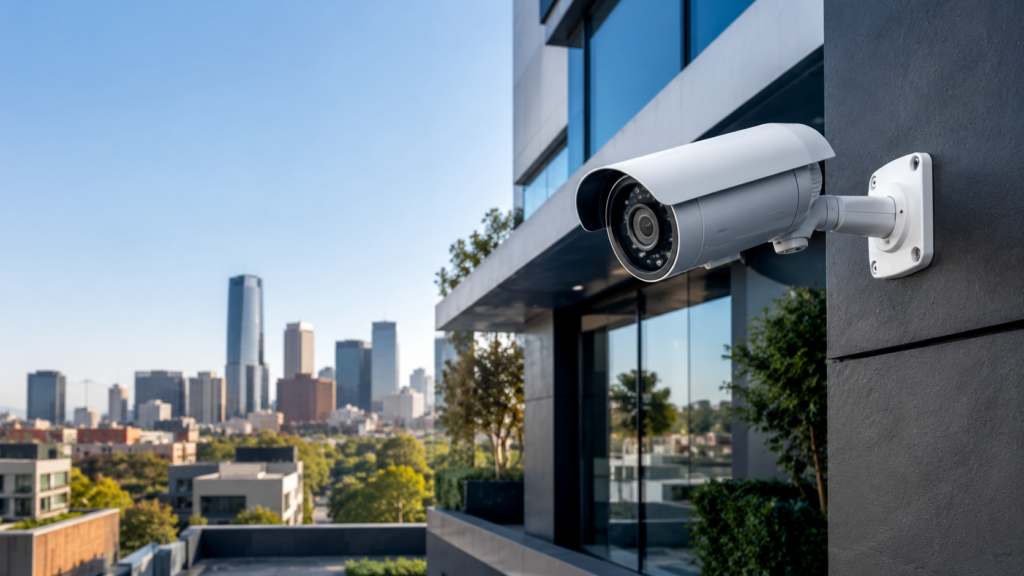
7 Important Places to Install CCTV Cameras
Choosing the right camera positions is essential. Here are seven important areas to consider when planning your CCTV camera installation.
1. Main Entrance and Front Door
Your front entrance is one of the most important areas to monitor.
Install a CCTV camera where it can capture people approaching your property. Position it to provide a clear view of visitors and entrance activity.
This can help you identify visitors and monitor suspicious activity.
2. Back Doors and Secondary Entrances
Back doors and side entrances can become security blind spots. These areas may receive less attention than your main entrance.
Installing CCTV cameras around secondary entrances helps improve overall property coverage.
Choose positions that capture movement without unnecessary obstructions.
3. Driveways and Parking Areas
Driveways and parking spaces require proper monitoring. Vehicles and valuable equipment can become targets for theft.
A strategically positioned camera can monitor vehicles entering and leaving your property.
For larger parking areas, consider multiple cameras to improve coverage.
4. Gates and Boundary Entrances
Your property’s gates provide an important access point. Installing CCTV cameras near these areas helps monitor visitors and vehicle movement.
Position cameras to capture approaching vehicles and people entering the property.
However, ensure that gates, walls and other objects do not block the camera’s view.
5. Backyards and Outdoor Spaces
Outdoor areas can create security blind spots, especially at night.
Consider installing cameras around:
Backyards.
Garden entrances.
Outdoor storage areas.
Swimming pool surroundings.
External passageways.
Weather-resistant cameras are important for outdoor installations.
6. Garages and Storage Areas
Garages often contain vehicles, tools and valuable equipment. Therefore, monitoring these spaces can improve property security.
Position cameras to capture garage entrances and important storage areas.
Ensure that the cameras provide clear footage without being blocked by shelves or stored items.
7. Business Entrances and Reception Areas
Businesses can benefit from CCTV cameras around entrances and reception areas.
These cameras help monitor customer activity and staff access.
Depending on your business requirements, additional cameras may be useful in corridors, stockrooms and loading areas.
How High Should CCTV Cameras Be Installed?
Camera height affects the quality of your security footage.
Installing cameras too low can make them easier to damage or interfere with. However, cameras positioned too high may struggle to capture useful facial details.
Consider these installation guidelines:
Position cameras to capture clear views of important areas.
Avoid placing cameras behind trees or other obstacles.
Consider lighting conditions throughout the day.
Protect outdoor cameras from harsh weather.
Test camera angles before completing installation.
The ideal height depends on the camera type and the area being monitored.
Indoor vs Outdoor CCTV Camera Installation
Indoor and outdoor cameras serve different security purposes.
Indoor CCTV Cameras
Indoor cameras help monitor offices, reception areas, hallways and other internal spaces.
They are useful for monitoring activity inside your property.
Outdoor CCTV Cameras
Outdoor cameras monitor entrances, driveways, parking spaces and surrounding areas.
These cameras should have suitable weather protection and night vision capabilities where required.
Choosing the right camera depends on your property’s layout and security requirements.
Common CCTV Camera Installation Mistakes to Avoid
Poor camera placement can reduce the effectiveness of your security system.
Avoid these common mistakes:
Leaving Security Blind Spots: Cover entrances and vulnerable areas properly.
Ignoring Lighting Conditions: Poor lighting can affect footage quality, especially at night.
Installing Cameras Too High: Excessive height may reduce useful identification details.
Blocking the Camera View: Trees, walls and other objects can obstruct footage.
Choosing the Wrong Camera: Select cameras designed for their intended indoor or outdoor environment.
Ignoring Privacy: Avoid recording private areas where people have a reasonable expectation of privacy.
Why Choose Professional CCTV Camera Installation in Johannesburg?
Professional installation helps ensure that your cameras cover the correct areas.
An experienced installer can assess your property and recommend suitable camera positions.
Professional CCTV camera installation can help you achieve:
Better property coverage.
Fewer security blind spots.
Suitable camera positioning.
Reliable system configuration.
Improved security monitoring.
The right installation approach depends on your property size and security requirements.
Secure Your Property with Yonke Solutions
Protecting your property starts with choosing the right security equipment and installation positions.
Whether you need CCTV cameras for your home or business, proper planning makes a difference.
Yonke Solutions can help you explore suitable security solutions for your property.
Contact Yonke Solutions today to discuss your CCTV camera installation requirements in Johannesburg
Frequently Asked Questions
Where is the best place to install CCTV cameras around a property?
The best locations include entrances, driveways, gates, garages and other important access points. Cameras should cover areas where people enter or leave the property while reducing blind spots.
Should CCTV cameras be installed at the front and back of a house?
Yes. Front and back entrances are important areas to monitor because they provide access to the property. Installing cameras at both locations can improve visibility and help monitor suspicious activity.
Should I install CCTV cameras at my driveway and gate?
Yes. Driveways and gates are common access points for visitors, vehicles and deliveries. CCTV cameras in these areas can help you monitor who enters and leaves your property.
How high should outdoor CCTV cameras be installed?
Outdoor cameras should generally be positioned high enough to reduce tampering while still capturing clear images of people and activity. The ideal height depends on the camera type, viewing angle and area being monitored.
Should CCTV cameras cover every corner of my property?
Not necessarily. A good CCTV layout focuses on important access points and vulnerable areas. Proper positioning can reduce blind spots without requiring cameras in every location.