
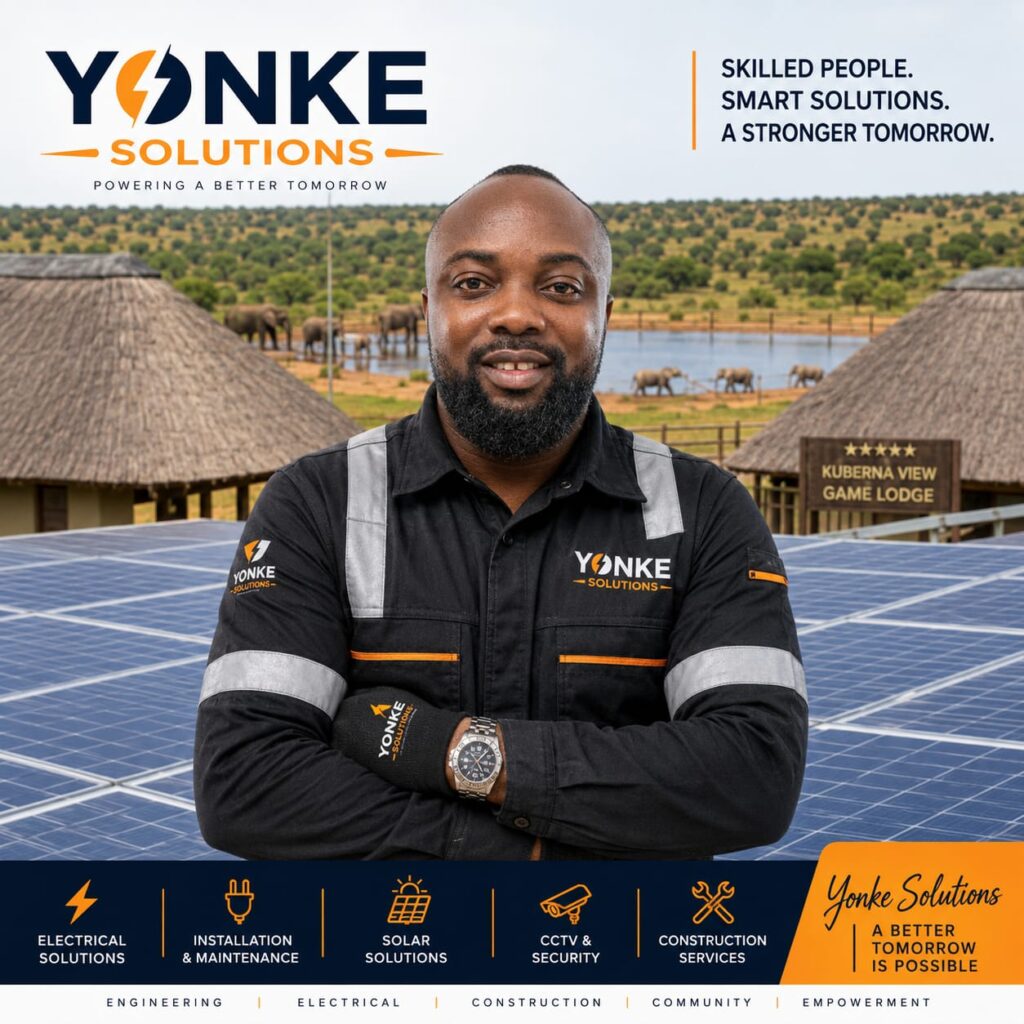
Solar Panel Installation Johannesburg – Professional Solar Solutions by Yonke Solutions
Solar panel installation Johannesburg is a practical investment for homeowners, businesses and property owners who want to reduce electricity expenses, improve energy independence and make better use of renewable energy. At Yonke Solutions, we offer professional solar panel installation services throughout Johannesburg, helping customers explore suitable solar energy solutions for residential and commercial properties.
With rising electricity costs and the need for reliable energy, more Johannesburg residents are considering solar panels, hybrid inverters and battery storage systems. A properly designed solar installation can help reduce dependence on grid electricity while providing additional flexibility in managing household and business energy consumption.
Yonke Solutions focuses on delivering quality electrical and solar solutions tailored to each customer’s requirements. Whether you need a new solar system, inverter installation, battery backup or assistance with an existing solar setup, our team is available to discuss your project.
We serve Johannesburg, particularly Johannesburg South, including Mondeor, Glenanda, Glenvista, Oakdene, Ormonde and surrounding communities.
Contact Yonke Solutions today for a solar panel installation quotation.
- Telephone: 010 076 9045
- WhatsApp: 064 558 8265
- Email: info@yonkesolutions.co.za
- Website: https://www.yonkesolutions.co.za/
Table of Contents
- Professional Solar Panel Installation Johannesburg
- Benefits of Installing Solar Panels
- Residential Solar Panel Installation
- Commercial Solar Panel Installation
- How Solar Panel Systems Work
- Types of Solar Power Systems
- Solar Panels, Inverters and Batteries
- Our Solar Installation Process
- Choosing the Right Solar System
- Solar Panel Installation Prices
- Solar Panel Maintenance and Cleaning
- Solar Panel Repairs and Upgrades
- Solar Installation Safety and Compliance
- Solar Installation Areas in Johannesburg
- Why Choose Yonke Solutions?
- Frequently Asked Questions
- Request a Solar Installation Quote
1. Professional Solar Panel Installation Johannesburg
Choosing a reliable solar installation company is an important step when investing in renewable energy. A solar system is a long-term investment that requires careful planning, suitable equipment and safe installation.
Yonke Solutions provides solar panel installation Johannesburg services for customers who want efficient solar electricity solutions suited to their properties.
Our services can include residential solar panel installation, commercial solar systems, hybrid inverter installation, solar battery integration and solar system upgrades.
Every property has different electricity requirements. A small household may need a solar system that supports lighting, refrigeration and internet connectivity, while a larger property may require additional capacity for multiple appliances.
Commercial buildings may require systems designed around office equipment, refrigeration, machinery or other business operations.
Before selecting equipment, it is important to understand electricity consumption, roof suitability, available space and the customer’s budget.
A correctly planned solar installation should consider both present and future energy requirements.
What Does Solar Panel Installation Include?
Depending on the system design, a complete installation may include:
- Solar photovoltaic panels
- Solar mounting structures
- Hybrid or grid-tied inverters
- Lithium battery storage
- Electrical protection equipment
- Solar cables and connectors
- Distribution board integration
- Monitoring equipment
- Testing and commissioning
The equipment must be compatible and suitable for the intended application.
Our goal is to help customers understand their options and select an appropriate solar energy solution.
2. Benefits of Installing Solar Panels in Johannesburg
Solar electricity offers several potential benefits for homeowners and businesses.
Johannesburg receives substantial sunshine throughout the year, creating opportunities for solar electricity generation.
Although solar production varies with weather, shading and equipment performance, a suitable installation can help customers manage electricity consumption.
Reduce Monthly Electricity Bills
One of the main reasons customers choose solar panel installation Johannesburg is to reduce electricity purchased from the grid.
Solar panels generate electricity during daylight hours, allowing connected appliances to use solar energy instead of relying entirely on grid electricity.
The amount saved depends on the system capacity, electricity consumption patterns, local tariffs and available sunlight.
Homes and businesses with significant daytime electricity usage may benefit from using solar energy directly as it is generated.
Improve Energy Independence
Solar installations can reduce dependence on conventional electricity supply.
When combined with compatible battery storage and backup-capable equipment, a solar system may also supply selected appliances during power interruptions.
Solar panels alone do not automatically provide electricity during an outage. The system must be specifically configured for backup operation.
Support Long-Term Energy Planning
Installing solar equipment allows property owners to plan how electricity will be generated, consumed and stored.
A well-designed system can also provide flexibility when household or business requirements change.
Make Better Use of Roof Space
Many Johannesburg properties have roof areas that may be suitable for solar panels.
Before installation, the roof should be assessed for structural condition, orientation, shading and available mounting space.
Correct positioning helps maximise the electricity that the system can generate.
3. Residential Solar Panel Installation Johannesburg
Residential solar panel installation is suitable for homeowners who want to manage electricity expenses and improve energy security.
At Yonke Solutions, we understand that households have different requirements.
Some customers need a small solar system for essential appliances, while others want a larger installation capable of supporting more electrical loads.
Solar Power for Family Homes
A residential solar system may support appliances such as:
- Lights
- Refrigerators and freezers
- Televisions
- Wi-Fi routers
- Computers
- Security systems
- Selected kitchen appliances
- Home office equipment
The number of appliances that can operate simultaneously depends on inverter capacity and the overall system design.
High-consumption appliances, including electric geysers, stoves and air conditioners, require additional consideration.
Solar Installation for Townhouses
Townhouse owners may also benefit from solar energy where suitable roof space and electrical infrastructure are available.
Some townhouse developments have body corporate rules governing solar installations.
Property owners should confirm any required permissions before proceeding.
Solar Power for Home Offices
Reliable electricity is particularly important for people working from home.
A suitable solar and battery system can help support essential equipment such as computers, internet routers and lighting during electricity interruptions.
Battery capacity should be selected according to the expected electricity load and required backup duration.
4. Commercial Solar Panel Installation Johannesburg
Businesses often consume considerable electricity during normal working hours.
Commercial solar installations can help offset some of this daytime consumption and potentially reduce operating expenses.
Yonke Solutions welcomes enquiries from Johannesburg businesses interested in solar energy solutions.
Solar Panels for Offices
Office buildings use electricity for computers, lighting, networking equipment, air conditioning and other business systems.
A suitable solar installation can supply part of this electricity during daylight hours.
The system should be designed according to actual energy consumption and operating schedules.
Solar Systems for Retail Shops
Retail businesses depend on electricity for lighting, payment systems, refrigeration and security equipment.
Solar power can help reduce grid consumption, while appropriately configured battery backup may support selected essential circuits during interruptions.
Solar Solutions for Warehouses
Warehouses may have large roof areas suitable for solar panels.
However, roof structure, electricity demand and equipment requirements must be evaluated before installation.
Solar Installation for Workshops
Workshops may use machinery and equipment with substantial electrical loads.
A detailed electrical assessment is necessary to determine whether a proposed solar system can support the required operations.
Commercial installations should always be planned around technical suitability, safety and expected financial benefits.
5. How Solar Panel Systems Work
Understanding how solar electricity works helps customers make informed decisions about their installations.
A solar power system uses photovoltaic technology to convert sunlight into electrical energy.
Solar Panels Generate Electricity
Solar panels contain photovoltaic cells that generate direct current electricity when exposed to sunlight.
The amount of electricity produced depends on panel capacity, sunlight intensity, temperature, shading and installation conditions.
The Inverter Converts Electricity
Most household and business appliances operate using alternating current electricity.
A solar inverter converts suitable direct current electricity into alternating current electricity for connected appliances.
Different inverter types provide different functions.
Solar Energy Powers Appliances
Electricity generated by the solar panels can be used to operate compatible appliances and equipment.
Depending on the system configuration, excess solar energy may be used to charge batteries.
Batteries Store Electricity
Battery storage allows energy to be used later when solar generation is insufficient.
Stored electricity may support selected appliances during the evening or during grid interruptions.
Monitoring Tracks Performance
Some systems include monitoring applications that display electricity generation, battery levels and consumption.
Monitoring helps customers understand how their system performs and identify unusual changes.
6. Types of Solar Power Systems
Several solar configurations are available for residential and commercial properties.
Choosing the right system depends on the customer’s objectives, budget and electricity requirements.
Grid-Tied Solar Systems
Grid-tied solar systems operate in connection with the electricity grid.
They are commonly used to reduce grid electricity consumption during daylight hours.
A standard grid-tied system without backup functionality normally shuts down during a grid outage for safety reasons.
Hybrid Solar Systems
Hybrid solar systems can combine solar panels, battery storage and grid electricity.
These systems provide flexibility in managing electricity generation and consumption.
When correctly designed, a hybrid system can also supply selected backup circuits during power interruptions.
Hybrid installations are popular among customers who want both electricity savings and backup capability.
Off-Grid Solar Systems
Off-grid systems operate independently of the electricity grid.
They require sufficient solar generation and battery storage to meet electricity demand.
Careful planning is particularly important because energy production changes with weather conditions.
Off-grid installations may require additional backup arrangements for periods of low solar generation.
7. Solar Panels, Inverters and Battery Storage
A complete solar installation contains several components that work together.
The quality and compatibility of these components influence overall system performance.
Solar Panels
Solar panels are responsible for generating electricity from sunlight.
Important factors when selecting panels include:
- Rated power output
- Efficiency
- Panel dimensions
- Manufacturer warranty
- Equipment compatibility
- Available roof space
The highest-rated panel is not necessarily the most suitable option for every installation.
Solar Inverters
An inverter is a central part of most solar systems.
It converts electricity into a form suitable for connected appliances and may also manage battery charging and grid interaction.
The inverter should be selected according to expected electrical loads and the proposed system configuration.
Solar Batteries
Solar batteries store electrical energy for later use.
Lithium-based batteries are widely used in modern residential energy storage systems.
Battery selection should consider usable capacity, power output, compatibility and manufacturer specifications.
Solar Mounting Structures
Mounting structures secure solar panels to a suitable roof or ground-mounted framework.
Correct mounting is important for structural safety and equipment durability.
Roof type, environmental conditions and applicable installation requirements should be considered.
8. Our Solar Panel Installation Process
Solar panel installation Johannesburg projects should follow a structured process to support safety and reliable operation.
Step 1: Initial Consultation
The first stage involves understanding the customer’s electricity requirements.
We encourage customers to provide information about their property, electricity consumption and preferred backup appliances.
Step 2: Property Assessment
The property is assessed to determine whether solar installation is suitable.
Important considerations include roof condition, available space, shading, electrical infrastructure and equipment locations.
Step 3: Solar System Planning
A system configuration can then be proposed according to the customer’s requirements.
The design should consider electricity generation, inverter capacity, battery storage and installation limitations.
Step 4: Equipment Selection
Suitable solar panels, inverters, batteries, mounting equipment and electrical protection devices are selected.
Equipment compatibility is essential.
Step 5: Installation
The mounting structures, panels and associated electrical equipment are installed according to the approved design.
Electrical work must be completed by appropriately qualified personnel.
Step 6: Testing and Commissioning
The completed system should be inspected, tested and commissioned.
This helps confirm that equipment is operating as intended and relevant safety requirements have been addressed.
Step 7: Customer Handover
Customers should receive information about system operation, monitoring, maintenance and applicable documentation.
Understanding how the system operates helps customers use their solar equipment effectively.
9. Choosing the Right Solar System for Your Property
Selecting a solar system requires careful consideration of several factors.
A system should be designed around actual electricity requirements rather than relying only on advertised package sizes.
Evaluate Your Electricity Consumption
Electricity bills can provide useful information about average energy consumption.
Customers should also consider when electricity is used throughout the day.
For example, a household with substantial evening consumption may require a different configuration from a business operating mainly during daylight hours.
Identify Essential Appliances
Customers who require backup power should identify which appliances must continue operating during outages.
Essential loads may include refrigeration, lighting, internet connectivity and security equipment.
Consider Your Budget
Solar installation costs vary according to equipment capacity and installation complexity.
Customers should compare system specifications, warranties and expected functionality when evaluating quotations.
Plan for Future Requirements
Future electricity needs may change.
Discussing possible expansion during the initial planning stage can help customers select equipment with suitable capabilities.
10. Solar Panel Installation Prices in Johannesburg
The cost of solar panel installation Johannesburg depends on the equipment selected and the requirements of the property.
There is no universal price that applies to every installation.
Factors Affecting Installation Costs
Several factors influence the total quotation.
Solar panel quantity: Larger systems generally require more panels and mounting equipment.
Inverter capacity: Inverter size and functionality influence equipment costs.
Battery storage: Adding batteries increases initial investment but may provide backup functionality.
Roof conditions: Roof height, structure, material and accessibility can affect installation complexity.
Electrical infrastructure: Some properties require electrical modifications before installation.
Protection equipment: Appropriate electrical protection and isolation equipment must be included.
Installation labour: Labour requirements vary according to system size and complexity.
Comparing Solar Installation Quotations
Customers should request quotations that clearly identify the proposed equipment and installation scope.
A quotation should explain which components are included, what work will be completed and whether additional electrical upgrades may be required.
It is also important to understand equipment warranties, workmanship arrangements and applicable compliance documentation.
Contact Yonke Solutions for a quotation based on your property and electricity requirements.
11. Solar Panel Maintenance and Cleaning Johannesburg
Solar panels are designed for outdoor operation, but periodic maintenance can help identify problems and maintain suitable performance.
Environmental conditions may cause dust, bird droppings, leaves and other debris to accumulate on panel surfaces.
Why Solar Panel Cleaning Matters
Accumulated dirt can reduce the amount of sunlight reaching the photovoltaic cells.
The effect depends on the severity and location of the contamination.
Solar panel cleaning can help remove unwanted deposits when necessary.
Cleaning frequency varies according to local conditions, rainfall, roof accessibility and manufacturer recommendations.
Safe Solar Panel Cleaning
Cleaning solar panels requires appropriate methods and safety precautions.
Abrasive materials, unsuitable chemicals and incorrect cleaning techniques may damage equipment.
Working at height also creates significant safety risks.
Customers should use suitable professional cleaning services where rooftop access is required.
Routine Solar Inspections
Periodic inspections may include checking visible panel condition, mounting structures, electrical connections and system performance.
Electrical testing should only be performed by appropriately qualified personnel.
Related service: Solar Panel Cleaning Johannesburg.
12. Solar Panel Repairs and System Upgrades
Existing solar installations may occasionally require inspection, repairs or upgrades.
Changes in electricity generation can occur for several reasons.
Common Solar System Problems
Potential issues include:
- Reduced electricity production
- Inverter warning messages
- Damaged solar panels
- Faulty electrical connections
- Battery charging problems
- Equipment communication faults
- Shading or dirt accumulation
A proper assessment is important because reduced performance does not always indicate a defective panel.
Solar Inverter Troubleshooting
Inverters may display fault codes when operating conditions fall outside their normal parameters.
Customers should follow manufacturer guidance and avoid opening electrical equipment themselves.
Solar Battery Problems
Battery issues may involve reduced usable capacity, charging faults or communication problems.
The appropriate solution depends on the battery technology, equipment compatibility and fault condition.
Expanding Existing Solar Systems
Some installations can be expanded with additional panels or battery storage.
However, the existing inverter and electrical infrastructure must be checked before modifications are made.
Related service: Solar Panel Repairs Johannesburg.
13. Solar Installation Safety and Compliance
Electrical safety is an essential part of solar panel installation Johannesburg.
Solar panels can generate electricity whenever sufficient sunlight is available, and incorrect installation may create electrical hazards.
Qualified Installation Personnel
Electrical installation work should be performed by appropriately qualified and authorised personnel.
Customers should confirm that their installation provider can meet the applicable technical and regulatory requirements.
Electrical Protection
Solar installations may require appropriate isolation devices, circuit protection, earthing and surge protection.
The exact requirements depend on the system design and applicable standards.
Certificates of Compliance
Electrical installation work must comply with relevant South African regulations.
Customers should confirm which certificates, inspections and test documentation are required.
Municipal Requirements
Grid-connected solar installations may be subject to registration or approval requirements from the relevant electricity distributor.
Johannesburg customers should confirm the applicable requirements with City Power or their electricity supplier.
Customers can consult City Power Johannesburg for electricity-related information and the South African Government for official regulatory resources.
14. Solar Panel Installation Areas in Johannesburg
Yonke Solutions focuses on serving customers throughout Johannesburg, particularly Johannesburg South.
Solar Panel Installation Mondeor
Homeowners in Mondeor can contact Yonke Solutions to discuss solar panels, hybrid inverters and battery backup systems.
Solar Panel Installation Glenanda
Customers in Glenanda can explore residential solar solutions designed around their electricity requirements and property conditions.
Solar Panel Installation Glenvista
Glenvista homeowners and businesses considering solar energy can request information about suitable installation options.
Solar Panel Installation Oakdene
Customers in Oakdene can enquire about new solar installations, inverter integration and battery storage.
Solar Panel Installation Ormonde
Residential and commercial property owners in Ormonde can contact Yonke Solutions to discuss solar installation requirements.
Other Johannesburg Locations
We also welcome enquiries from other Johannesburg suburbs.
Customers can confirm service availability for their particular location when requesting a quotation.
15. Why Choose Yonke Solutions for Solar Panel Installation?
Selecting a solar installation provider involves more than comparing equipment prices.
Customers should consider technical suitability, communication, installation quality and after-installation requirements.
Electrical and Solar Services
Yonke Solutions offers electrical services alongside solar and inverter installation.
Solar systems interact with existing electrical infrastructure, making electrical planning an important part of installation.
Solutions for Different Properties
Residential and commercial properties have different energy requirements.
A suitable solar system should reflect the property’s electricity consumption, available space and intended use.
Focus on Johannesburg Customers
Our Johannesburg service focus allows us to assist customers looking for local electrical and solar solutions.
Additional Electrical Services
Yonke Solutions also offers electrical fault finding, wiring, maintenance and related property services.
Customers can discuss relevant electrical requirements when planning a solar installation.
Customer-Focused Communication
Understanding the proposed equipment and system capabilities is important before investing in solar energy.
We encourage customers to ask questions about installation scope, equipment specifications and expected operation.
16. Frequently Asked Questions About Solar Panel Installation Johannesburg
How much does solar panel installation cost in Johannesburg?
Prices depend on the number of panels, inverter capacity, battery storage, roof conditions and installation requirements. Request a quotation based on your property.
How many solar panels do I need for my house?
The number depends on electricity consumption, panel specifications, available roof space and desired solar generation.
Can solar panels work during power outages?
Solar panels can support backup electricity when connected to a correctly designed system with appropriate inverter and storage capabilities. Standard grid-tied systems without backup functionality generally shut down during outages.
Do I need batteries with solar panels?
Not every solar installation requires batteries. Batteries are useful when customers want energy storage or backup functionality.
How long does solar installation take?
Installation duration depends on system size, property conditions, electrical work and any required approvals.
Do solar panels work on cloudy days?
Yes. Solar panels can generate electricity in cloudy conditions, although output is generally lower than during strong sunlight.
Can solar panels reduce my electricity bill?
Solar panels may reduce electricity purchased from the grid. Actual savings depend on electricity usage, system performance and applicable tariffs.
Can solar panels be installed on a tiled roof?
Many tiled roofs can accommodate solar panels when the roof structure and mounting system are suitable.
Can I add panels to my existing inverter?
Additional panels may be possible if the inverter and existing electrical system have sufficient compatible capacity.
How often should solar panels be cleaned?
Cleaning frequency depends on environmental conditions, contamination and manufacturer recommendations.
Is solar power suitable for businesses?
Solar power can be suitable for businesses with appropriate installation space and electricity consumption patterns.
Does solar installation require municipal approval?
Grid-connected installations may require registration or approval from the relevant electricity distributor. Requirements should be confirmed before installation.
Can solar power run an entire house?
A suitably designed system may support substantial household electricity consumption. The actual capability depends on generation, inverter capacity, storage and electrical loads.
How do I request a solar installation quotation?
Contact Yonke Solutions with your location, property details and electricity requirements.
17. Request a Solar Panel Installation Quotation in Johannesburg
If you are planning solar panel installation Johannesburg, Yonke Solutions is available to discuss your solar energy requirements.
Whether you are a homeowner looking to reduce electricity expenses or a business owner considering renewable energy, selecting the correct system is an important decision.
A suitable solar installation should be based on your electricity consumption, available roof space, budget and intended use.
Our solar and electrical services are focused on helping Johannesburg customers explore practical energy solutions.
We welcome enquiries about residential solar panels, commercial solar installations, hybrid inverters, battery storage and related electrical services.
Contact Yonke Solutions today and request a solar installation quotation.
Yonke Solutions – Electrical and Solar Services Johannesburg
- Telephone: 010 076 9045
- WhatsApp: 064 558 8265
- Email: info@yonkesolutions.co.za
- Website: https://www.yonkesolutions.co.za/
- Service Area: Johannesburg, South Africa
Invest in a solar solution designed around your property, electricity needs and long-term energy goals.